P·13 · Mechanical · Electrical · Machine Learning
Invasive Algae Detection with MiSo and Neural Networks
Classifying invasive vs native algae from water chemistry with a neural network, on a sealed low-cost sensor platform 99.5% cheaper than commercial options.
At a glance
- 100%five-tub classification with a research-grade YSI sensor
- 90.4%three-tub classification with $185 of Arduino sensors
- 99.5%cheaper: MiSo platform vs the lowest-cost commercial alternative
- Where
- Independent research with ARL
- Role
- Researcher
- Team
- Solo research, with a fishpond partner and ARL's MiSo platform
- Status
- Complete
- Neural networks
- Time-series windowing
- Feature engineering
- Arduino
- KiCad
- Resin 3D printing
- O-ring sealing
- Soldering and board bring-up
- Water-quality sensing (YSI)
- Experimental design
The problem
Invasive algae cause biodiversity loss and poorer water quality, and they destroy coral reefs, which absorb up to 97% of wave energy and contribute more than $2.7 trillion a year to the global economy. Finding and identifying invasive algae today is manual, slow and expensive.
I focused on Hawaii’s most harmful invasive alga, Gracilaria salicornia, and the native Gracilaria parvispora. My design criteria:
| Criterion | Target |
|---|---|
| Validity | detect G. salicornia with at least 90% accuracy |
| Labor | cut manual labor by more than 80% |
| Cost | more than 90% cheaper than popular automated methods |
Approach
A controlled experiment first
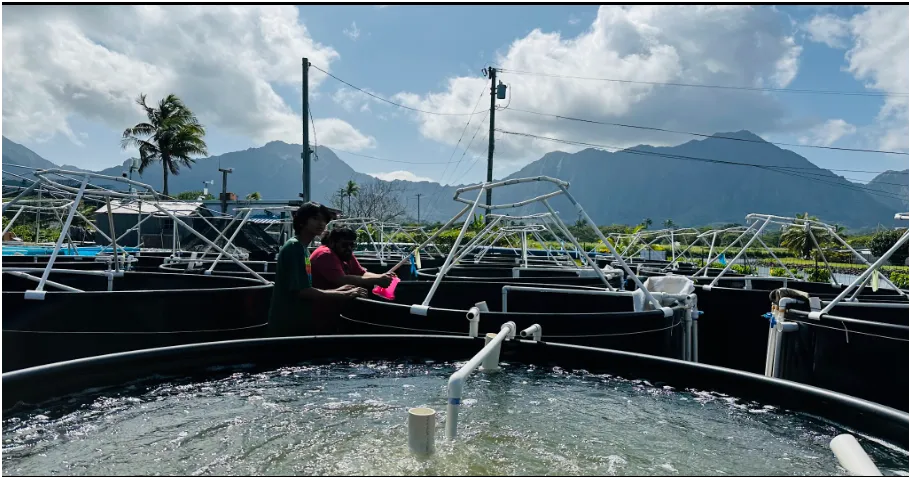
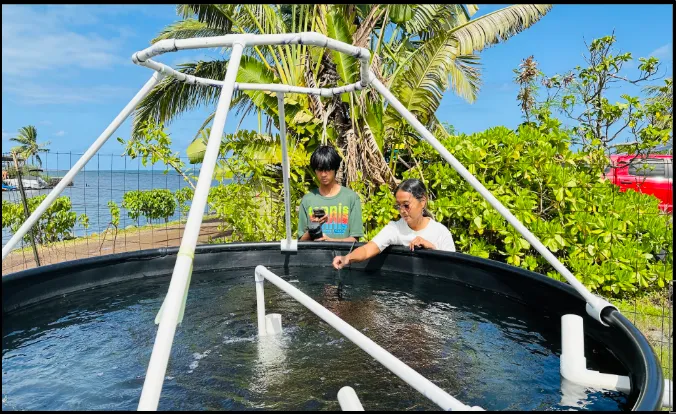
I partnered with a Hawaiian fishpond and set up five 1,000-gallon tubs fed from the pond: invasive, native, sterile saltwater, and two open-pond tubs that acted as small ecosystems. To make sterile saltwater, I let two tanks settle for 48 hours, moved the top half to a sterilized tank and treated it with pool bleach. G. salicornia came from the fishpond and G. parvispora from a deep-sea well testing facility. The native alga was stressed by the move, so I fed it a fertilizer slurry twice a week until the study began.
Proving there is a signal
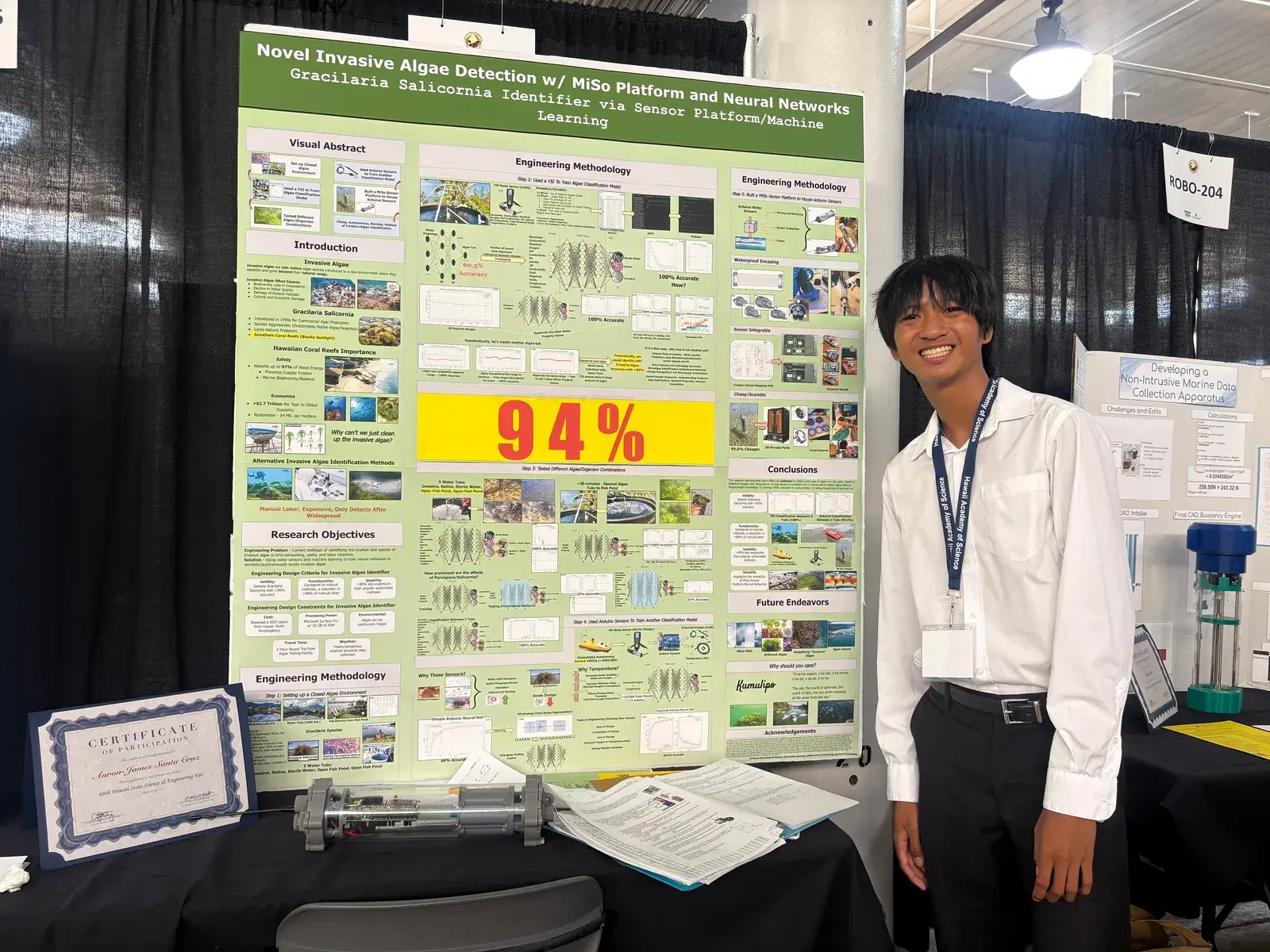
A YSI sensor, a $7,000 research-grade instrument, logged 10 water properties (dissolved oxygen, temperature, barometric pressure and others) across three weeks, more than 50,000 data points. My first neural network reached 60.3%. Using all 10 properties, it reached 100%. Most single properties, dissolved oxygen included, had completely separate ranges for each tub, so even one property could classify the water. Barometric pressure and total suspended solids were the exceptions.
Cheaper sensors, chosen by physics
Commercial autonomous surface vehicles that collect this kind of data cost $200,000 to $1.2 million, and the YSI alone costs $7,000. Because the ranges were so distinct, I tested two cheap sensors: a $180 Arduino dissolved-oxygen probe and a $5 temperature sensor. I picked dissolved oxygen because the less dense G. parvispora produces more oxygen than the denser G. salicornia, and temperature because it sets how much oxygen the water can hold.
Over three weeks I collected 10,000 points. The first model reached 69%, because oxygen and temperature alone overlapped too much. I raised it to 90.4% by windowing (reading trends over time instead of single points), changing the hidden layers, and deriving new features. That traded about 10 points of accuracy for a sensor set 97% cheaper.
MiSo: a sealed platform for real water
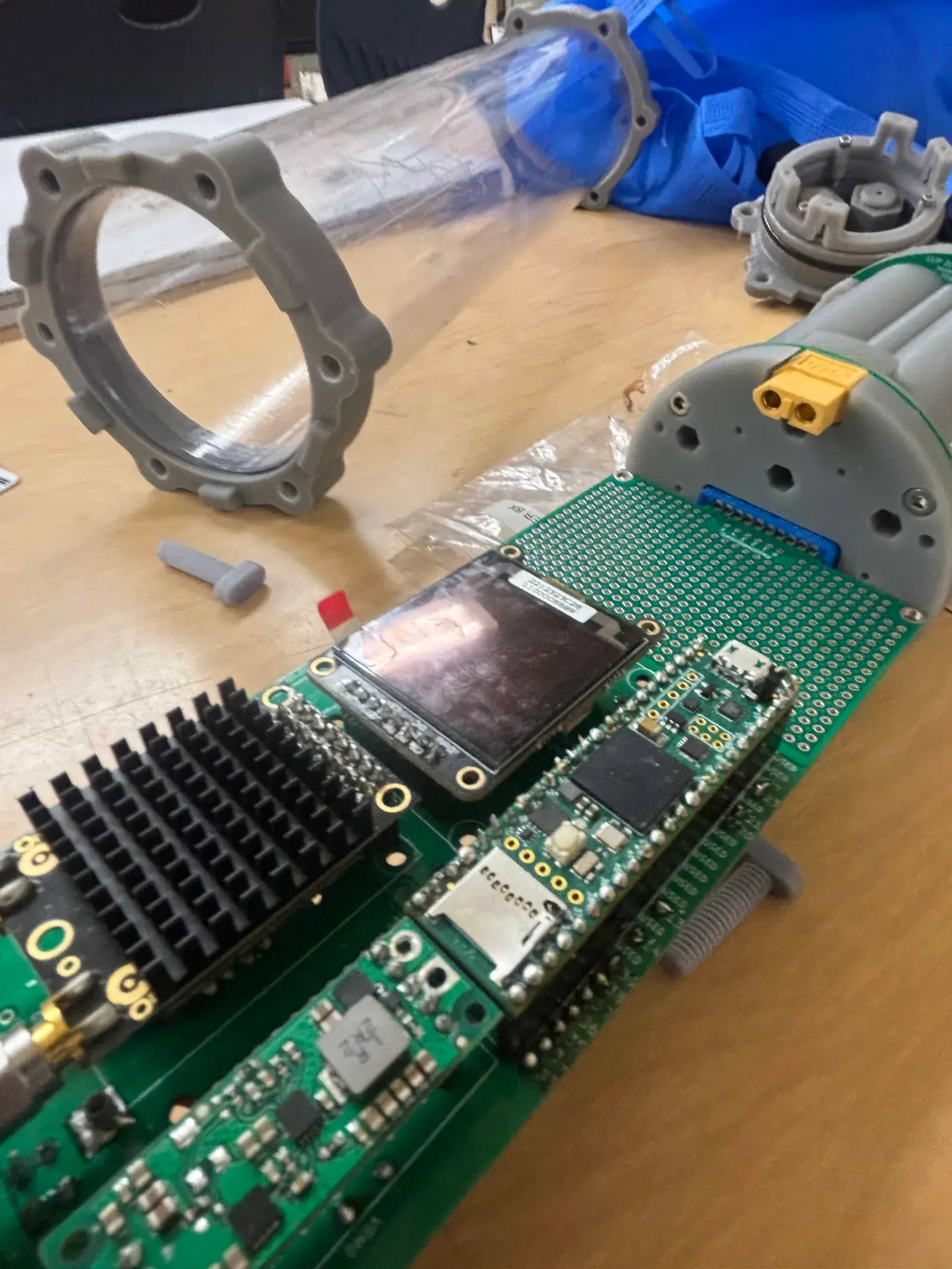
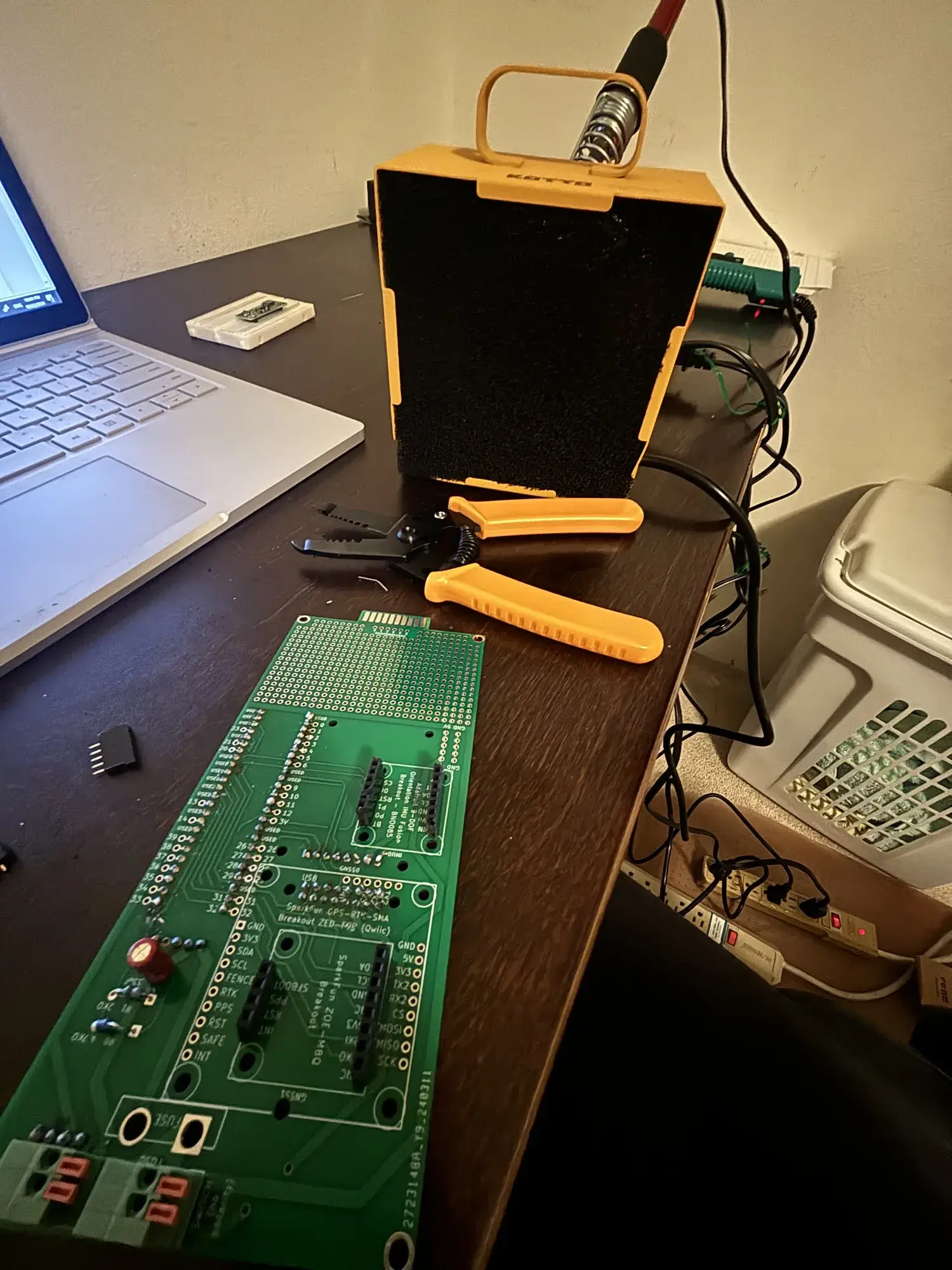
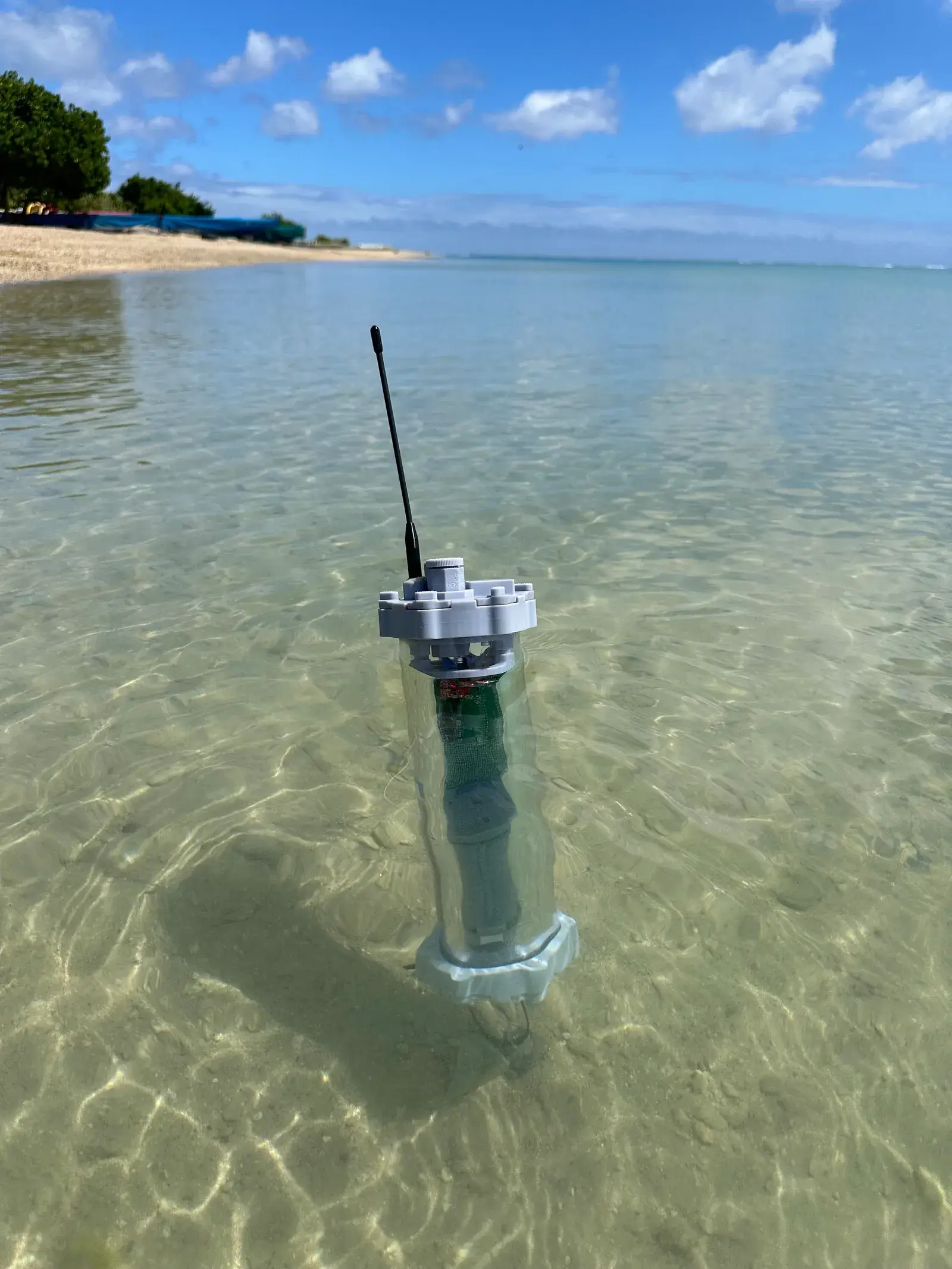
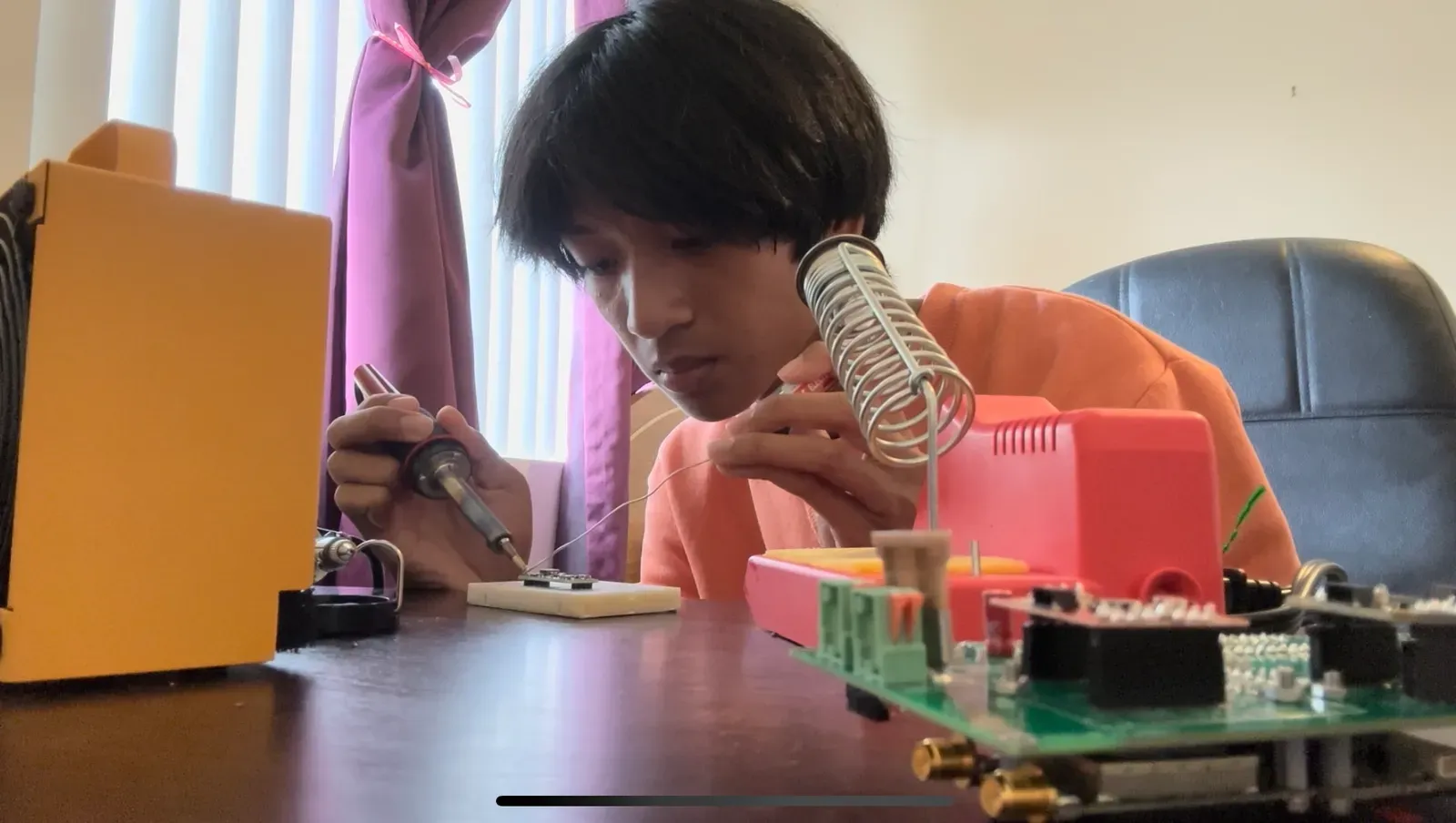
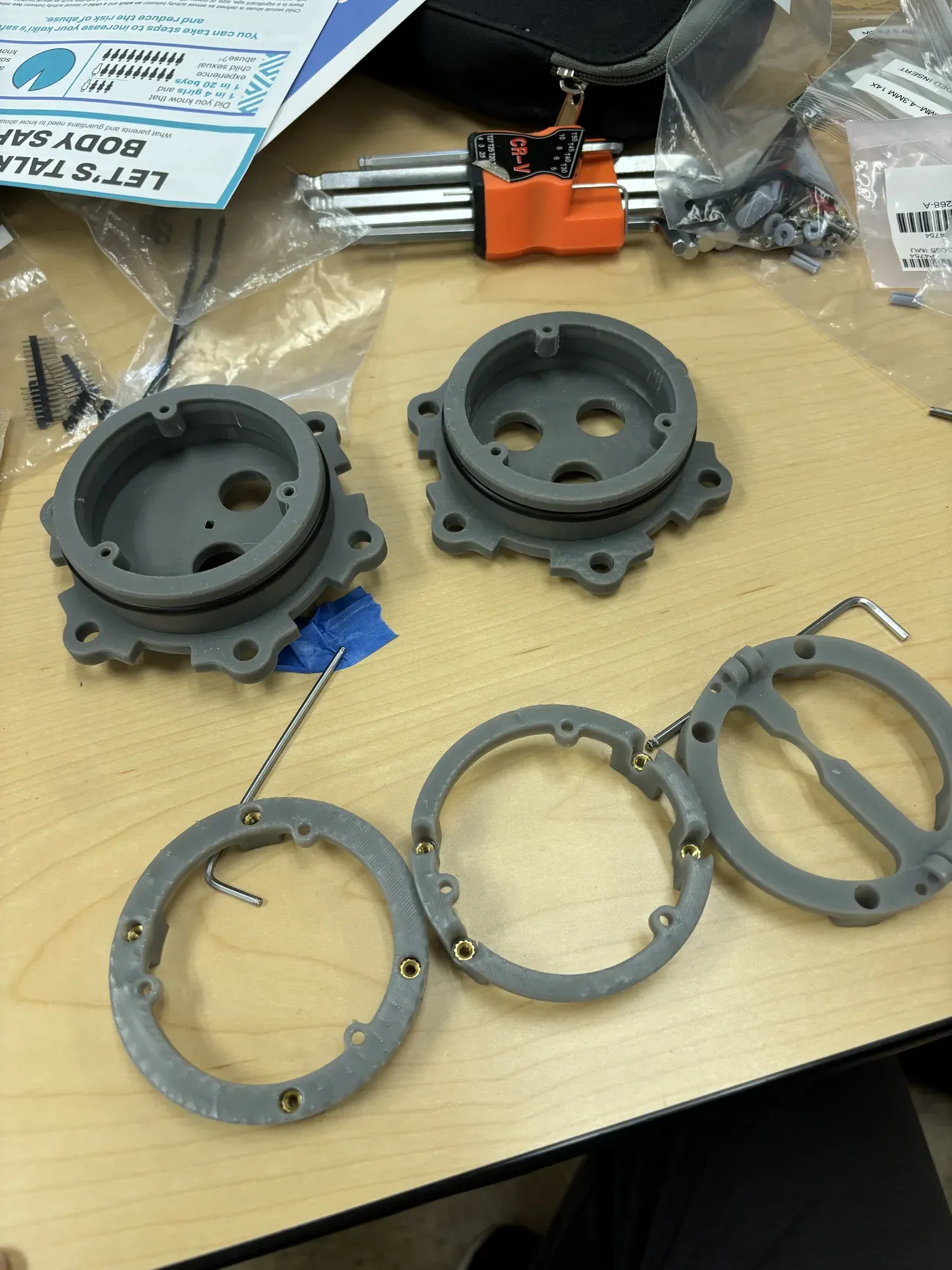
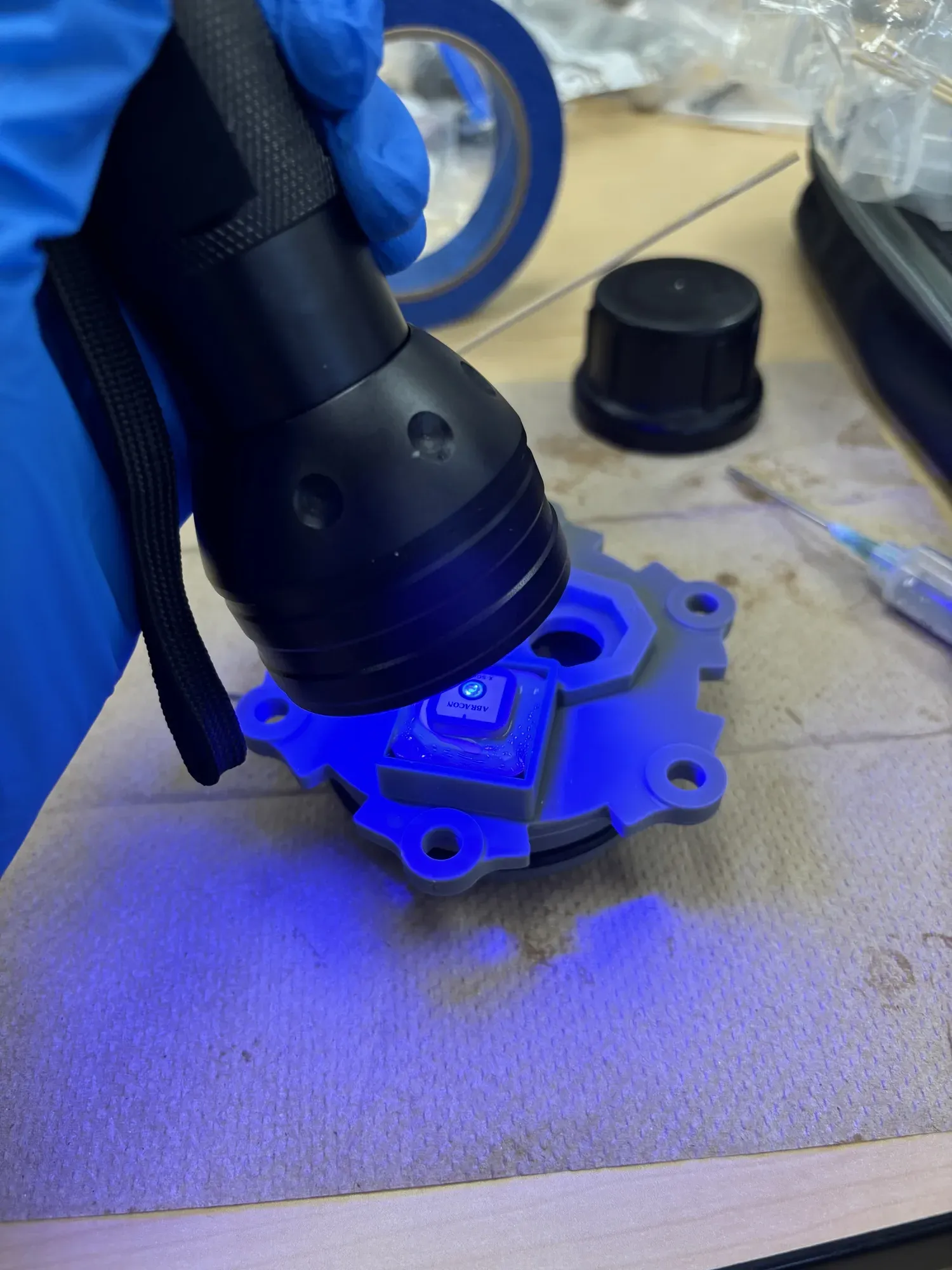
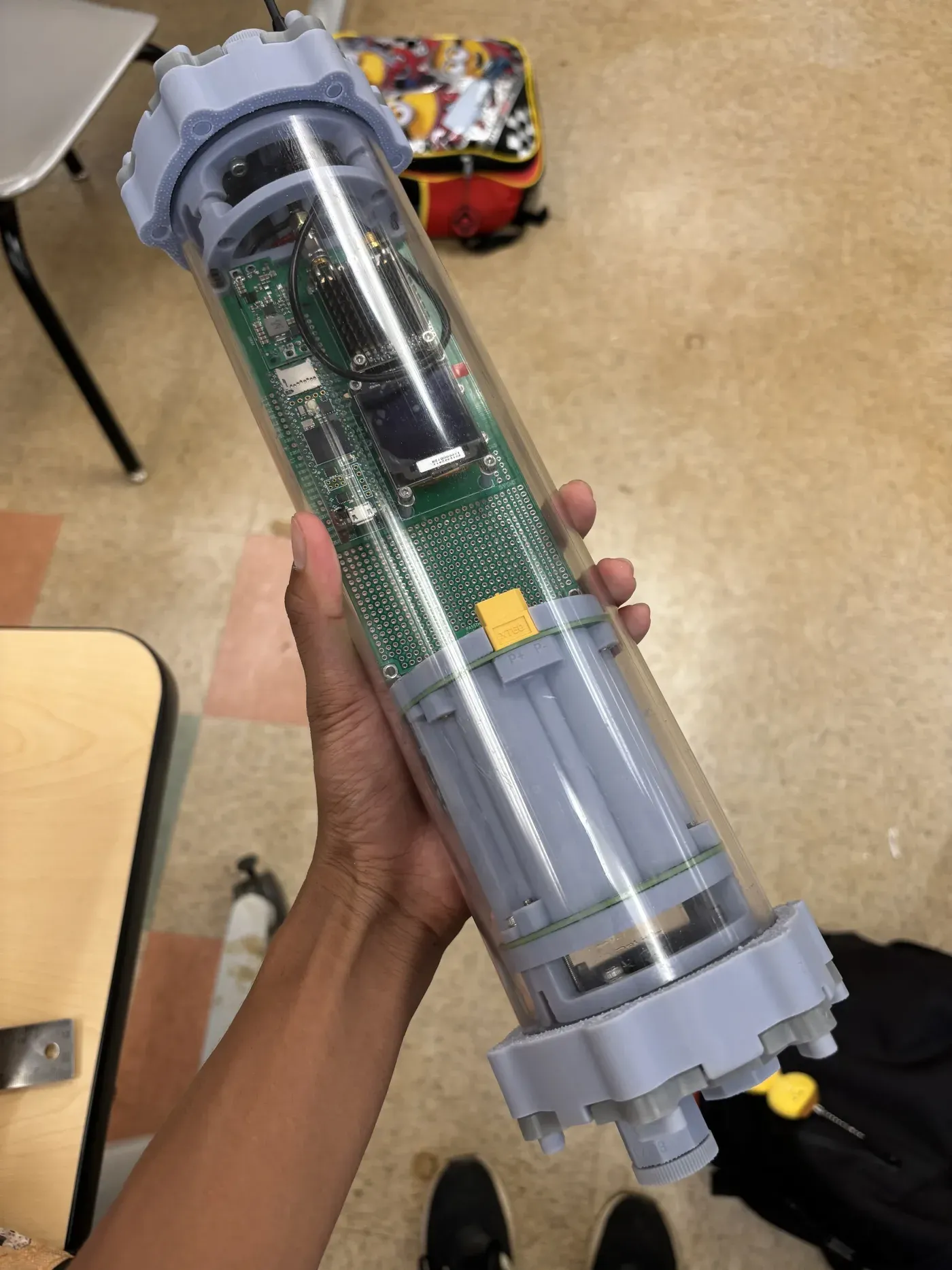
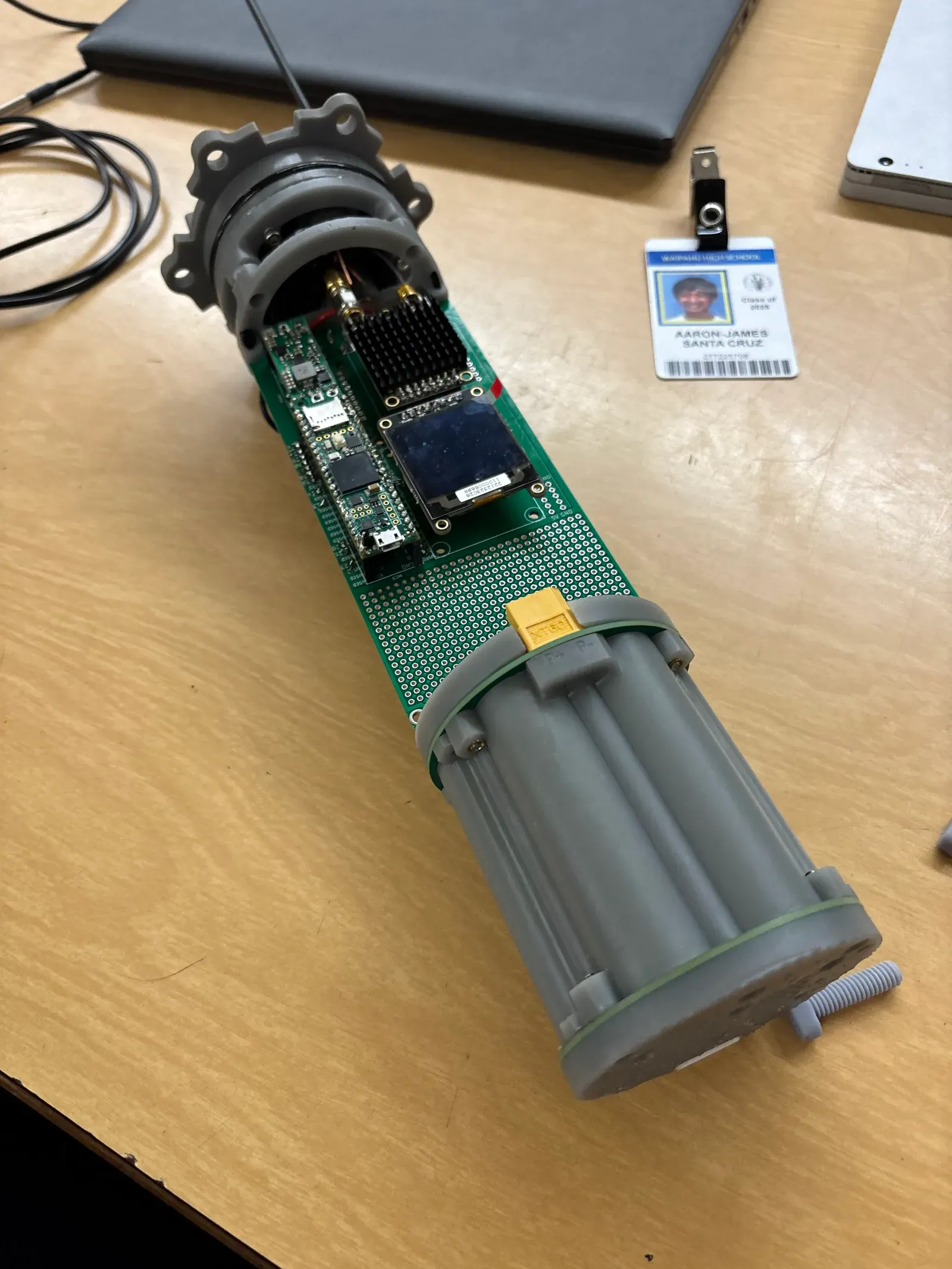
To deploy the Arduino sensors in open water, I worked with ARL on MiSo, a waterproof sensor platform printed in resin. The base platform, its CAD and its original PCB are ARL’s work. I modified the KiCad PCB so interchangeable Arduino sensors plug into it, and designed replaceable plugs so probes swap without rebuilding the housing.
- Every insert seals with O-rings coated in dielectric grease.
- The harder components are encased in resin.
- The housing is positively pressurized: if no air escapes, no water gets in.
I hand-soldered the board, troubleshot it, and ran it on batteries, with an antenna in place for future wireless.
Engineering detail: where the model breaks
After six months the open-pond tubs held a full ecosystem of microalgae and other organisms. To test a more realistic case, I opened the controlled tubs to the pond for 30 minutes, and within days a new green alga bloomed.
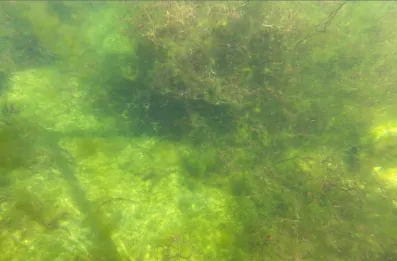
- A new network trained on more than 15,000 points that included the bloom stayed at 100%, because dissolved oxygen and total dissolved solids still barely overlapped.
- A network trained without the bloom and then frozen scored 33% on data with the bloom, about what random guessing gets. Using all 10 properties raised it to 67%.
The lesson: a network only holds up in environments like the one it was trained in.
Results
- The YSI network classified all five tubs at 100%.
- The Arduino network classified three tubs at 90.4%. Both beat the 90% target.
- The YSI setup is 96.5% cheaper, and MiSo 99.5% cheaper, than the lowest-cost commercial alternatives.
- The system replaces manual identification with automated classification.
The project won the Hawaii Youth Investigators Top Award, and I was a Top Pitch Scholar with the 2nd-place proposal in the Honua Scholars competition, where I presented the fully assembled MiSo to a panel of PhD professors.
The open-tub test above was the closest to open water: the tubs were open to the fishpond and a new alga moved in, and the retrained model stayed accurate. I had also planned a boat to tow the YSI or MiSo sensors autonomously, along with more environments and algae species.
My contribution
I designed and ran the experiments, collected the data, built and trained the networks, chose and integrated the low-cost sensors, modified MiSo’s PCB, designed its replaceable plugs, and hand-built the unit. ARL designed the base MiSo platform, its CAD and original PCB.
Gallery
4 images